
Why this crane matters
The Whirley Crane is not a replica and not a generic leftover. It is a real machine that worked in Richmond during World War II.
- Built in 1935 by Clyde Iron Works of Duluth, Minnesota, for construction of the Grand Coulee Dam.
- Moved to Richmond in August 1941 and put to work at Todd California Shipbuilding, which became Kaiser Shipyard No. 1.
- Used throughout the war with dozens of similar cranes that lifted prefabricated ship sections into place. The Richmond yards built about 747 ships.
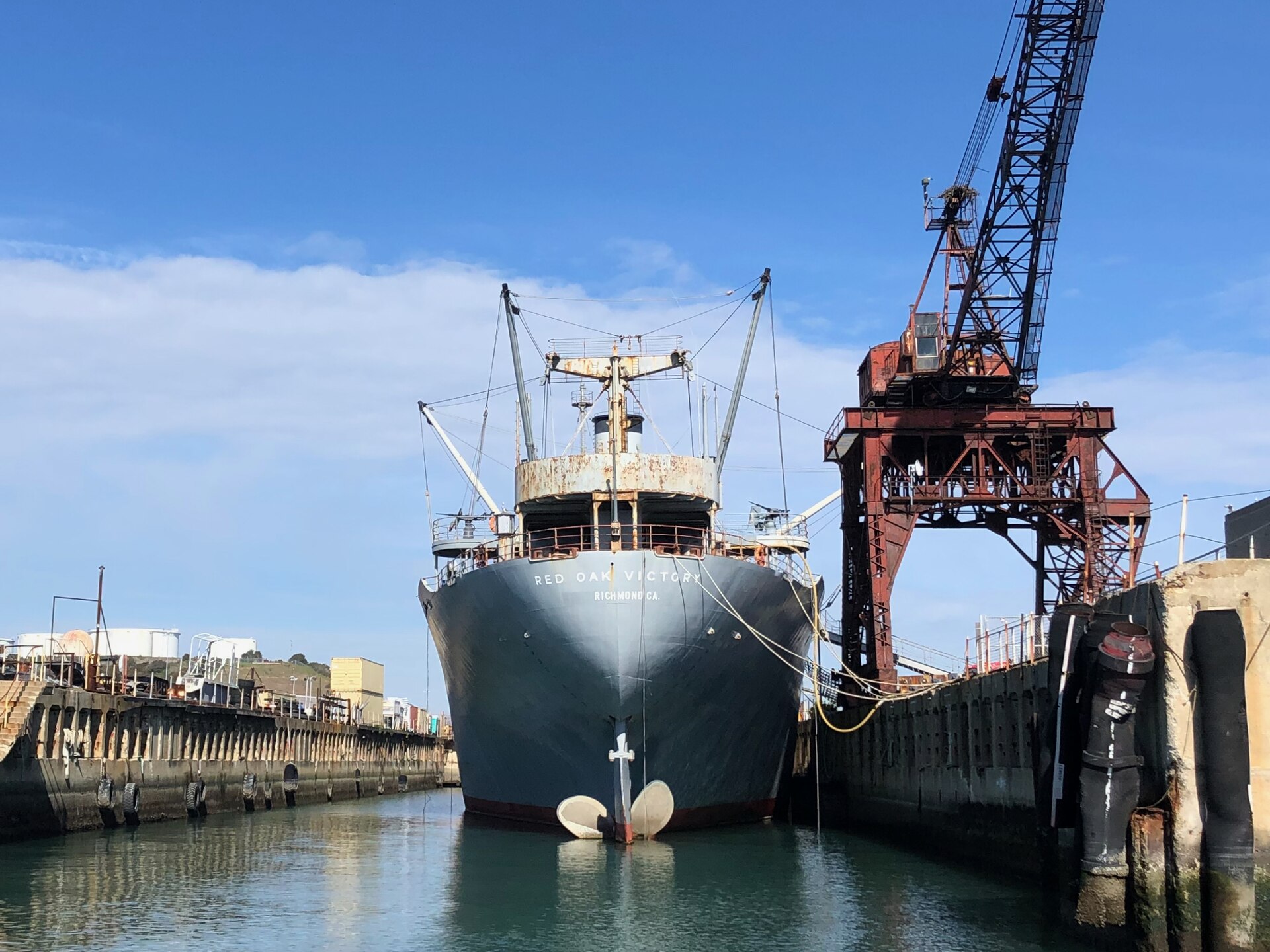
- The SS Red Oak Victory was built at Kaiser Shipyard No. 1 and launched on November 9, 1944. This crane was already operating in that yard during the ship’s construction.
- In 2005, the City of Richmond accepted the crane and relocated it to Shipyard No. 3 for permanent interpretive display next to the Red Oak Victory as part of the Rosie the Riveter / WWII Home Front National Historical Park.
Calling it merely “imported” or “representative” misses the point. It is a surviving artifact of the industrial system that built ships in Richmond.
Timeline
- Clyde Iron Works builds the crane Serial CW-3204 / CW-3205, for Grand Coulee Dam.
- Barged to Richmond Erected at Todd California Shipbuilding / Kaiser Shipyard No. 1.
- Wartime production It operates in the Richmond shipyards during the wartime production boom.
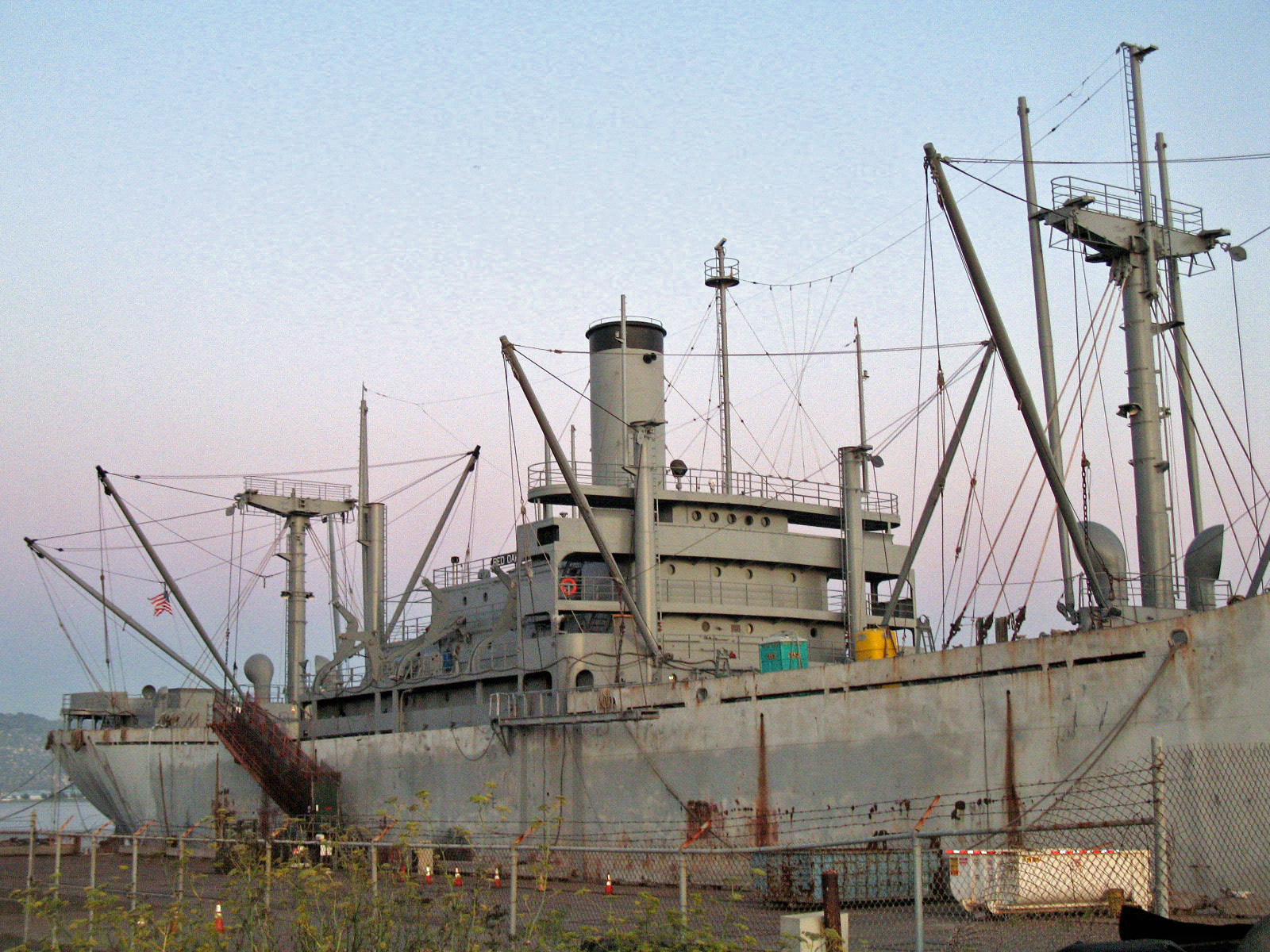
- SS Red Oak Victory launched Built at Kaiser Shipyard No. 1.
- City authorizes acquisition Richmond City Council authorizes acquisition and relocation of the crane for interpretive use in the National Historical Park.
- Moved to Shipyard No. 3 Conveyed to the City of Richmond for permanent exhibit. City Council Resolution No. 96-05 documents acceptance of the donation and its intended use next to the Red Oak Victory.
- National Park Service General Management Plan City Council unanimously approves the GMP (Alternative B). The plan designates the southern tip of Shipyard No. 3 as a Historic Engagement Area, including the whirley crane(s), historic buildings, graving basins, and the Red Oak Victory.
- General Plan 2030 Element 15 – National Historical Park calls for protection of home-front resources and identifies Shipyard No. 3 as a catalytic project.
- WJE Historic Structures Report Wiss, Janney, Elstner treats the crane as a static cultural resource with excess structural capacity. It finds the structure in fair condition and recommends coating/preservation rather than treating it as an operating machine.
- Liftech / Moffatt & Nichol assessment Documents failed coatings, corrosion, and falling-object hazards from deteriorated secondary parts. It presents three cost options: on-site preservation with seismic reinforcement, about $2.5 million; off-site museum preservation of selected parts, about $1.4 million; demolition, about $700,000. The 2025 assessment is a public City document. It incorrectly states that the Richmond Museum Association owns the crane. The City of Richmond owns it.
- Presented to City Council The broader Point Potrero Marine Terminal assessment is presented. News coverage highlights the crane’s condition and the demolition option.
- Winehaven Trust presses for an enforceable path The Trust demands that the City agree to an enforceable preservation path before litigation. The Port replies that no demolition decision has been made, that “immediate risk mitigation” is underway, and that any decision will go through public process, the Historic Preservation Commission, and City Council. The Port proposes a working meeting.
- Trust accepts the meeting Winehaven Trust documents 20+ years of neglected maintenance, corrects the “imported / representative” description, and objects to treating demolition as just another budget option.
What the City already promised
The crane’s place next to the Red Oak Victory is not a new idea. It is the City’s own adopted plan.
- Federal park law required a general management plan jointly developed and approved by the City to preserve the historic setting of the Rosie the Riveter / WWII Home Front National Historical Park.
- The 2009 GMP (Alternative B) placed the crane and the Red Oak Victory in the Shipyard 3 Historic Engagement Area so visitors could understand the scale of wartime shipyard operations.
- General Plan 2030, Element 15 made that partnership part of local land-use policy.
- The 2003 and 2005 City Council actions accepted the crane specifically for interpretive use at Shipyard No. 3.
Winehaven Trust’s position: the City cannot accept a historic artifact for permanent public interpretation and then let it rust until the cheapest option is demolition.
The current threat
Two things are happening at once:
Neglect. Since the City accepted the crane in 2005, it has not carried out a meaningful maintenance program. Richmond Municipal Code § 15.04.303.140 requires owners of historic resources to keep them in good repair and prevent demolition by neglect.
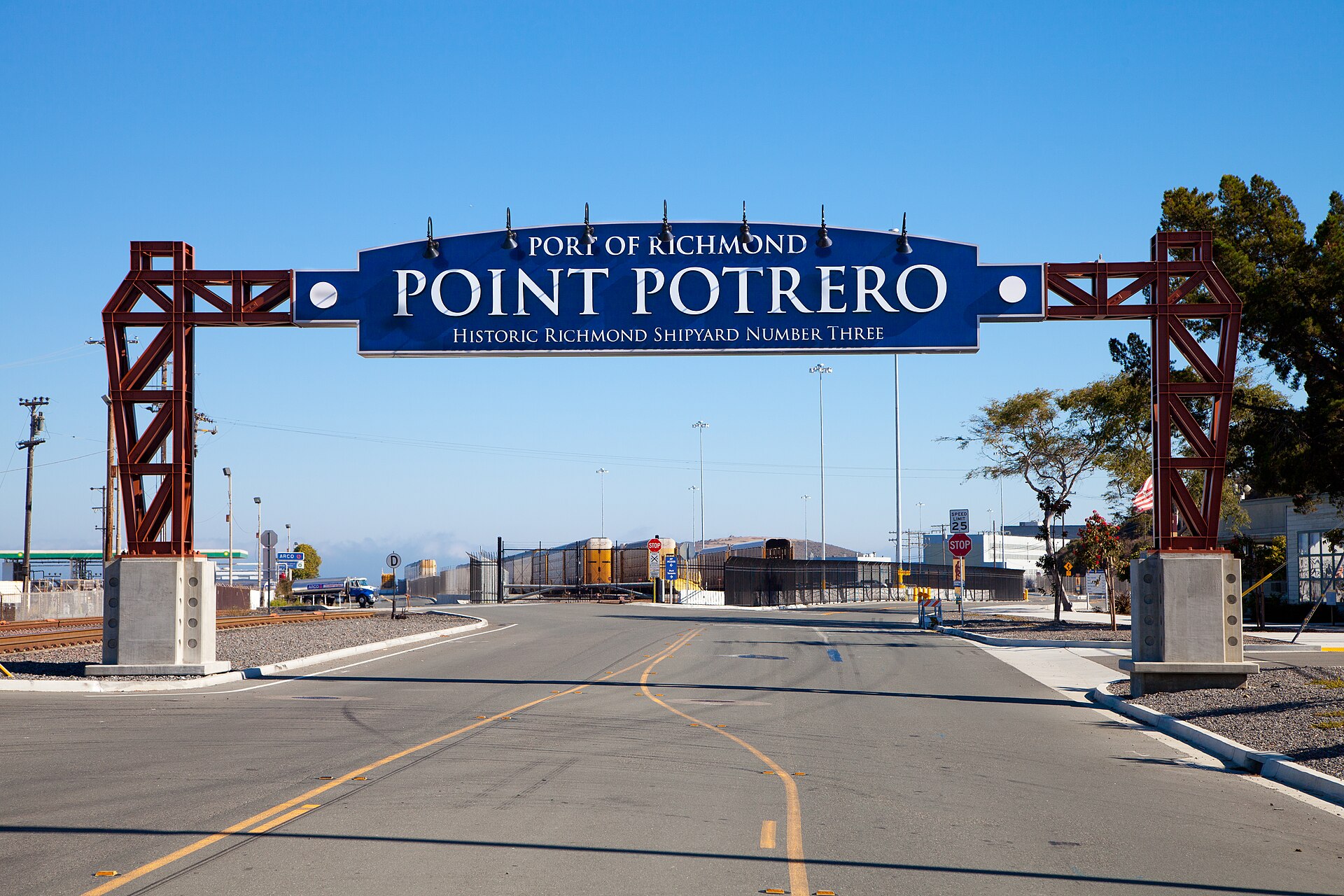
A changing waterfront plan. City and Port discussions include relocating the Red Oak Victory and studying Point Potrero for other industrial uses, including offshore-wind support. If the ship leaves and the crane is treated as leftover equipment, the Historic Engagement Area envisioned in the GMP is effectively dismantled.
The Port says no final demolition decision has been made. That is not the same as a commitment to preserve the crane on site.
2025 cost options
What Winehaven Trust is doing
Winehaven Trust is a Richmond nonprofit formed to advocate for historic resources at Winehaven / Point Molate and other historic resources in the City of Richmond through education and public advocacy.
Current efforts include:
- Documenting the crane’s real wartime history and its intended place next to the Red Oak Victory.
- Pressing the City and Port to follow the Historic Preservation Commission process and CEQA before any demolition or major alteration.
- Demanding an enforceable preservation path: immediate safety measures, no demolition without required review, a real stabilization plan, funding strategy, and public reporting.
- Accepting the Port’s offer of a working meeting while reserving the right to seek court relief if the City continues to delay or move toward removal.
- Comparing the 2025 Liftech assessment with the 2015 WJE Historic Structures Report, which treated the crane as an exhibit — not an operating crane that must meet modern OSHA/ADA/seismic standards for public climbing.
Winehaven Trust’s goal is simple: keep the crane standing at Shipyard No. 3, stabilized and interpreted with the Red Oak Victory, consistent with the City’s own 2005 acceptance and 2009 park plan.
Key facts at a glance
| Fact | Detail |
|---|---|
| Built | 1935, Clyde Iron Works, Duluth, MN |
| First job | Grand Coulee Dam |
| Arrived in Richmond | August 1941 |
| WWII workplace | Kaiser Shipyard No. 1 / Richmond yards |
| Current location | Point Potrero Marine Terminal (Shipyard No. 3), next to SS Red Oak Victory |
| Owner | City of Richmond (accepted 2005) |
| Purpose of 2005 move | Permanent interpretive exhibit for the National Historical Park |
| Boom / weight / capacity | About 110 ft boom; ~229,000 lbs; ~166,000 lb lifting capacity |
| 2015 WJE finding | Fair condition as a static exhibit; preserve with coating |
| 2025 assessment options | Preserve on site (~$2.5M), salvage parts (~$1.4M), demolish (~$700k) |
What you can do
- Tell the Mayor, City Council, Port Director, and Historic Preservation Commission that the crane should stay at Shipyard No. 3 and be maintained as a historic exhibit.
- Ask the City to reject demolition-as-the-cheap-option and fund stabilization consistent with the Secretary of the Interior’s Standards.
- Support keeping the Red Oak Victory and the crane together. Separating them erases the shipyard story both objects were meant to tell.
- Share this page and the crane’s real history: it worked in Richmond during the war, and the City accepted it so the public could see that history in place.
- Donate to Winehaven Trust to support this advocacy.
From the Tom Butt E-Forum
Tom Butt’s personal newsletter, the E-Forum, is the main public thread on how the whirley crane got to Shipyard No. 3 and why the Trust now treats demolition as a live threat. The posts below are his accounts, not City of Richmond documents.
In October 2025 he summarized the Port’s condition study: more than $228 million in terminal repairs, and three crane options that priced on-site preservation at about $2.5 million. He argued that figure treats the crane as if it still had to lift 85 tons, rather than stand as a static exhibit, and he reprinted the 2003–2005 Council actions that accepted the crane for interpretive use in the national park. He also pointed back to the 2015 WJE Historic Structures Report, which found excess structural capacity and recommended coating, not operation.
In 2026 the E-Forum turned to the park plan the City already adopted. Posts on the Rosie the Riveter / WWII Home Front National Historical Park and on “activating” the Shipyard 3 Historic Engagement Area argue that Alternative B of the 2009 General Management Plan put the crane, the graving basins, and the SS Red Oak Victory together so visitors could see the scale of wartime shipbuilding. Moving the ship and removing the crane, in that reading, dismantles the adopted plan without amending it. On August 2, 2026, he wrote that rumors of dismantling the crane were enough for Winehaven Trust to prepare a court filing to stop removal.
-
ROV Relocation Cost-Benefit Analysis
Critique of revenue projections used to justify moving the Red Oak Victory away from Shipyard No. 3, and of what that move would mean for the historic ensemble that includes the crane.
-
Demolition of the Whirley Crane
On reports that the City planned to dismantle the crane next to the Red Oak Victory, and on the Trust’s preparation of a complaint to keep it in place under the national-park general management plan.
-
Rosie the Riveter WWII Home Front National Historical Park
On the City’s 2009 approval of GMP Alternative B, General Plan 2030 Element 15, and the gap between those commitments and current proposals to move the ship and remove the crane.
-
Richmond City Council and the Red Oak Victory
On the Liftech relocation study, estimated move costs, and the argument that the ship should stay in the Historic Engagement Area with the crane.
-
Port of Richmond and the Whirley Crane
On the Moffatt & Nichol / Liftech assessment, 2003–2005 City Council resolutions accepting the crane, the 2005 move paid largely with donated work, and the 2015 WJE finding of excess capacity as a static exhibit.
See also Activate Shipyard 3 Historic Engagement Area and Letter to City Council — Study for Relocation of the Red Oak Victory. Current posts are listed at tombutt.com/e-forum.
Sources and documents
- National Park Service, “Whirley Crane: Richmond Shipyard No. 3.” nps.gov/rori/learn/historyculture/the-whirley-crane.htm
- National Park Service, SS Red Oak Victory history (built at Kaiser Shipyard No. 1; launched November 9, 1944)
- Richmond City Council actions of June 17, 2003 and November 2005 (Resolution No. 96-05) accepting the crane for interpretive use
- City Council approval of the Rosie the Riveter / WWII Home Front National Historical Park General Management Plan, April 7, 2009 (Alternative B)
- Richmond General Plan 2030, Element 15 – National Historical Park
- WJE, Historic Structures Report, Richmond Shipyard Number 3 (December 31, 2015)
- Liftech / Moffatt & Nichol, Condition Assessment of Whirley Crane at Point Potrero (June 26, 2025) — public City document: richmondca.gov Document Center
- Port of Richmond letter to Winehaven Trust, August 6, 2026
- Winehaven Trust letter to Port Director Charles Gerard, August 10, 2026
- Tom Butt E-Forum posts on the whirley crane, Shipyard No. 3, and the Red Oak Victory, 2025–2026, linked in From the Tom Butt E-Forum.